What a semiconductor giant just told us about your factory
We were invited to dinner recently with a global construction manager from one of the world's largest semiconductor chip manufacturers. Facilities across America and Asia. Billions in capex. A new million-square-foot facility going up outside New York. He wasn't there to talk about chips.
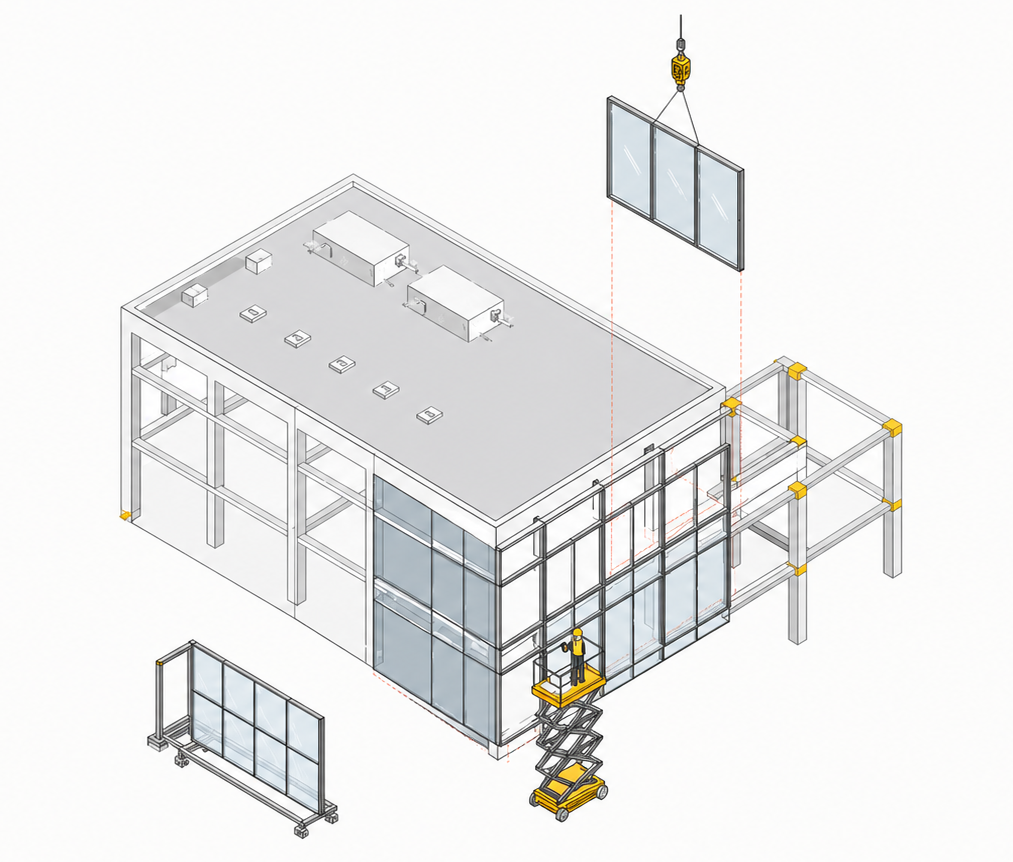
They’re not asking for a better price. They’re asking to see how you’ll actually deliver.
The construction director was there to talk about what's going wrong between drawing release and panel delivery on their construction programs. And what he's going to start requiring from the factories that bid on his work.
That's why we were at the table.
What they're worried about
This company is about to issue an RFP for a major external wall package. High volume. Repetitive work. On paper, it should be straightforward.
But the firms they've been working with can't answer a basic question: if you take this on, what exactly needs to happen inside your factory to deliver it on time?
Not a price. Not a promise. A plan. How many people. Which skill sets. Which weeks are overloaded. Where the bottleneck forms. What gets subbed out if the timeline compresses.
The fabricators couldn't produce that answer. They're experienced shops. Good people. But they don't have the tooling to model it. So the Contractor or GC is left guessing which bid is real and which one is optimism dressed up as a Gantt chart.
Why this matters to you
If you're running an external wall or facade shop in the $10M–$100M range, this is the signal.
The largest programs in America - data centres, semiconductor fabs, healthcare campuses - are being procured by owners who've been burned. Late panels, missed specs, zero visibility between factory visits. They've had enough of promises without proof.
What they want now is simple. Show me what's happening on the floor while it's happening. Show me you know your own capacity before you bid. Show me the quality records before I ask for them.
The General Contractors are responding. One of the biggest in the US has already started requiring production visibility from fabricators on their framework programs. Miss a delivery, get blacklisted. No second chances.
“Manufacturers who can clearly show how they’ll meet the schedule have a clear advantage in our tender appraisal - even if their number is slightly higher.”
The gap
Most shops know their factory. They know their people. They know their product.
What they don't have is the ability to put that knowledge in front of a customer during a bid window. To say: here's what we'd need to deliver on your program, here's where the risk sits, here's what we'd do about it.
The shops that can do this are winning the work. The ones that can't are watching the RFPs go to competitors who showed up with a plan instead of a promise.
A global semiconductor manufacturer just told us what he's looking for from his next fabrication partner. It wasn't the cheapest quote. It was the one that could prove they'd deliver.
If you're an external wall or facade manufacturer thinking about how to position for these programs - we spend most of our week with shops working through exactly this. Happy to compare notes. Get in touch.